
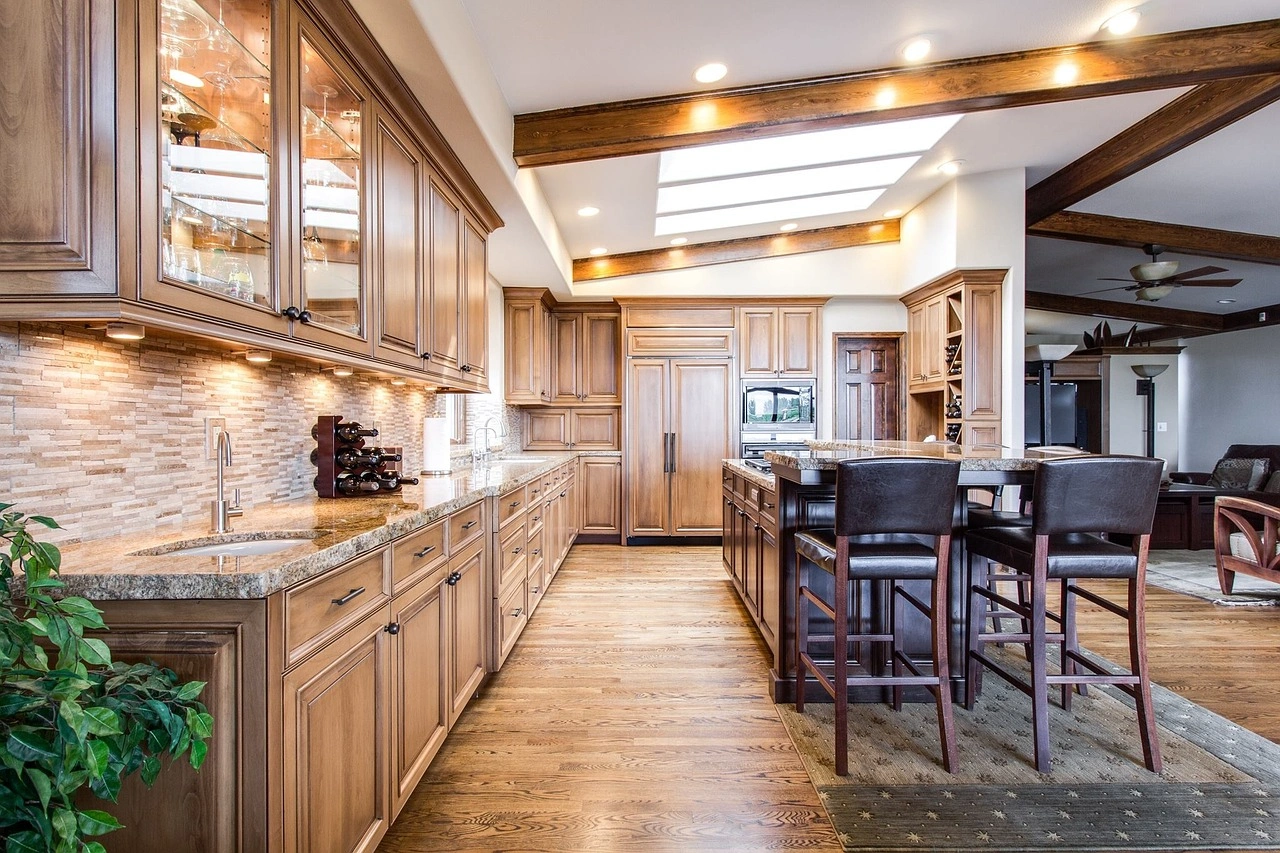
Residential interior design isn’t therapy, but it can support how you feel and function every day. After all, your home isn’t just where you live.
It’s where mornings happen. Where backpacks land. Where dinner gets made while someone’s asking for help with homework and someone else is looking for a missing soccer cleat.
A well-designed home doesn’t erase the highs and lows of life. Yet it can make life feel lighter. And that’s the goal with a family-centric home. A home that’s stylish but still inviting – draws your people in to gather, relax, and actually use the space without constant fussing.
Below are seven evidence-backed ways design can influence your mental health and wellness with design moves that prioritize comfort, durability, and a lived-in kind of beauty.
1. We Live Indoors More Than We Realize
If your home feels like it affects your mood, you aren’t imagining it. People spend about 90 percent of their time indoors, according to the EPA, the US Environmental Protection Agency. The EPA also warns that pollutant levels in your home can be higher than outdoors.
When we talk about healthy homes, we’re not referring to vague concepts or feel-good aesthetics. We’re talking about the real, measurable quality of the environment you spend most of your time in. Thoughtful design choices can meaningfully support everyday well-being. A few practical techniques include:
- Prioritizing materials and finishes with low chemical emissions, especially in bedrooms, nurseries, and play areas.
- Designing ventilation to be intuitive and easy to use – the best system is the one you’ll actually turn on.
- Focus on the spaces you use most. Kitchens, family rooms, children’s rooms, mudrooms, and entries have the greatest day-to-day impact and deserve the most attention.
2. Stress is Often a Design Problem in Disguise
If you ask us, most home-related stress or dissatisfaction isn’t tied to one big thing. Instead, it’s the accumulation of micro-frictions in day-to-day life that can make your home feel less comfortable and functional.
Some of the common friction points that impact quality of life at home include:
- No landing zone, turning mornings into a scavenger hunt
- Too much visual noise, so your mind never fully powers down
- Awkward pathways make everyone bump into each other at peak times
- Storage that fights your habits, making clutter grow back like a weed
NIH published a study that analyzed data from self-guided home tours taken by dual-income couples. Wives who described their homes with more “stressful” language, such as clutter and unfinished projects, had increasingly depressed moods as the day progressed. Compare this to wives that used more “restorative” language, like rest or nature – they experience decreasing depressed moods throughout the day.
Simply put, when your home feels chaotic or unfinished, your nervous system can treat it like an ongoing emergency or stressor.
And of course, it’s not difficult to make the connection that in a familial home, stress can show up as less patience and less time actually enjoying each other. Less than ideal, by far.
Design Strategies to Reduce Stress
- Create one obvious drop zone near the entry, sized for common essentials like bags, keys, shoes, sports gear
- Make storage frictionless by considering placement, size, and utility
- Use closed storage where you want your brain to rest, like luxury living rooms and primary bedrooms
- Make “unfinished” zones intentional, like a defined project drawer or cabinet
NOTE: This process is meant to increase calm, not add to stress. The goal here isn’t perfection. The goal is fewer mental tabs open, so your kitchen island can be for snacks and conversation, not a permanent sorting station.
3. Light Affects Sleep, Energy, and Mood
Light is one of the strongest drivers of your internal clock, known as the circadian system. When light is inconsistent, poorly timed, too dim (or too bright), you can feel it as fatigue, irritability, and restless sleep.
A study by the Journal of Clinical Sleep Medicine revealed that people with office windows slept an average of 46 minutes more per night during the workweek compared to those without. Even on their off days, this window group thrived with sleep quantity – 506 minutes versus 389 minutes!
Even though that study focused on workplaces, the takeaway translates beautifully to home design. Access to daylight and smart lighting aren’t only aesthetic upgrades, but they can also be wellness upgrades.
Design Strategies to Enhance Lighting
- Balance window treatments throughout the house that allow daylight while controlling glare – darker curtains in the bedroom make sense for sleep
- Layer different levels of lighting – ambient, task, and accent – so evenings feel calm, not cave-like
- Use warmer or yellow light in the evening and avoid harsh overhead glare
- Put the brightest, clearest light where you start your day, like the kitchen, bath, and dressing areas
A properly lit home tends to feel more stable, more anchoring, and easier to inhabit. It also makes family routines smoother because the space supports what you’re doing at each time of day.
4. Air Quality Influences Your Mental Clarity
Air quality sounds like a purely physical health topic, but it’s also cognitive and emotional. Stuffy air can make you feel sluggish, unfocused, and even a bit anxious. In family homes, kitchens, bathrooms, and tightly sealed rooms may quietly contribute to the feeling.
A study published by NIH compared conventional versus greener indoor conditions by having 24 participants spend full workdays in a controlled office environment. Cognitive functions were significantly higher on the “Green” and enhanced ventilation / low VOCs days compared to the conventional condition days.
Thanks to this study, it is easy to draw the conclusion that it’s worth it to make sustainable and eco-friendly design choices where possible to reduce VOCs and improve ventilation patterns.
Design moves that support cleaner air
- Choose low-emitting paints, sealants, and finishes where possible
- Ventilate kitchens and baths properly, as these are high-moisture and odor zones
- Consider better filtration and ensure air returns aren’t blocked by furniture
- Plan storage to keep harsh cleaners and strong-smelling products contained
- Have plants like the Snake Plant or Peace Lily to bring nature and increased oxygen into the home
Luckily, if a room feels heavy, stale, or headache-inducing, there are design and sourcing updates that can be made to bring a literal breath of fresh air to the space.
5. Bring in Nature to Soothe the Nervous System
There’s a reason why people gravitate to beautiful natural spaces like beaches, parks, and glaciers for their relaxing vacation. Nature often cues safety and restoration to the brain.
Roger Ulrich’s research on hospital recovery is one of the most famous studies that demonstrated the true physical impact of nature on healthy outcomes. The study compared surgical patients with window views of a forest with those facing a brick wall.
Not only did the nature viewing patients make fewer negative comments, but their hospitalizations were also shorter on average. We are talking 7.96 days versus 8.70 days.
You don’t have to live in a forest to bring this principle home. You can create small restorative moments with views, natural materials, and greenery.
Design moves that bring nature inside
- Frame the best outdoor view and place seating where you actually use it
- Use natural textures like wood, stone, linen, and wool to soften a space
- Add plants where they will thrive and be appreciated, and avoid areas where they will be forgotten in the dark to struggle
- Consider art that evokes landscapes and water without feeling themed
These choices make a home feel lived-in, relaxing, and restorative without feeling like a gallery.
6. Sound Design is Wellness Design
Noise is one of the most underestimated stressors in homes, especially for families. Of course, if you’re experiencing noise pollution like sirens or noisy neighbors, that will stand out.
However, the day-to-day amplifications, like a loud, echoey space is also impactful as they can make kids more dysregulated and adults more reactive. If you’ve ever noticed how everyone gets snappier in a hard-surfaced, open-concept room at the end of the day, that’s not just your imagination.
Your interior design can’t control the highway outside, or the nearby fire station, but it can control what happens inside your walls. A calmer, curated sound environment makes it easier for the whole family to regulate, especially at the end of the day.
Design moves that calm a loud room
- Add soft surfaces strategically, rugs, drapery, and upholstered seating
- Use built-ins and bookcases to break up sound reflections
- Choose quieter appliances when possible, especially in open kitchens
- Create at least one truly quiet retreat space, often the primary suite or a den
A quieter home often feels more luxurious, even without major aesthetic changes.
7. Layout Affects Relationships and Emotional Regulation
Wellness isn’t only personal, it’s relational. When family members constantly collide in bottlenecks or compete for the same workspace, tension rises.
Good space planning reduces conflict by making routines smoother.
- Multiple people can move through the kitchen at once
- Kids have a spot to drop backpacks without blocking traffic
- There is a place to talk and connect that isn’t centered on screens
- Messy activities have a contained zone, so the whole house does not feel messy
This is where interior design becomes an invisible family support system. It protects your energy by reducing the daily friction points you shouldn’t have to think about. It also creates natural moments for connection because the space makes it easy to gather.
Here are some quick layout wins that feel effortless because they:
- Widen pathways where possible, or clear them with a smarter furniture scale.
- Create a family command wall or cabinet that closes when you want peace.
- Float seating to encourage conversation, not just TV viewing.
- Give mess-prone activities a home base, craft drawer, homework caddy, and game cabinet.
- Make one spot in the home the default together place, the sofa arrangement, the table, and the nook.
Closing Thought!
There you have it! A well-designed home isn’t just something you look at. As an interior design service provider, we believe it’s something you lean on.
When your spaces are calm, supportive, and built for the way your family actually lives, your nervous system gets a break.
Mornings feel less frantic. Evenings feel easier. Sleep comes quicker. You find yourself hosting more, arguing less, and enjoying the home you worked so hard to create.
Finally, the real measure of great interior design service isn’t how perfect the final product looks in a photo. It’s how you feel in it on an ordinary Tuesday. Need help designing your house interiors?
Simply book your consultation, and we’ll get back to you in a jiffy!